
JW Meaning in Text: Powerful Slang Guide You Need 2026
If you have ever received a text that just said “jw, are you free tonight?” and paused to figure out what it meant, you are not alone. Texting slang moves fast, and short forms like JW pop up in group chats, DMs, and comment sections every single day. Once you know what it stands for, you will start spotting it everywhere.
This guide breaks down exactly what JW means, how people actually use it in 2026, and how to avoid the small mix ups that trip up even experienced texters.
What Does JW Mean? (Quick Answer)

JW stands for “Just Wondering.” It is a casual texting abbreviation used to soften a question and show that the person asking is simply curious, not demanding an answer or trying to pressure anyone. In religious contexts, JW can also refer to Jehovah’s Witnesses, but in everyday texting and social media, “Just Wondering” is the meaning you will see about 90 percent of the time.
That is the short version. Now let’s get into the details, because context changes everything with this one.
Read Also : CLFS Meaning in Text
Where JW Came From
Texting abbreviations like JW grew out of the SMS era, when messages were limited to 160 characters and every letter counted. People shortened common phrases to save space and time, and some of those shortcuts, like LOL, BRB, and JW, stuck around long after character limits stopped being a problem.
JW survived because it does something useful beyond saving keystrokes. It changes the tone of a question. A bare question like “why did you leave early?” can sound like an accusation. Add “jw” in front of it, and it reads as curiosity instead of confrontation. That small shift is why the abbreviation is still common in 2026, even though nobody is worried about text length anymore.
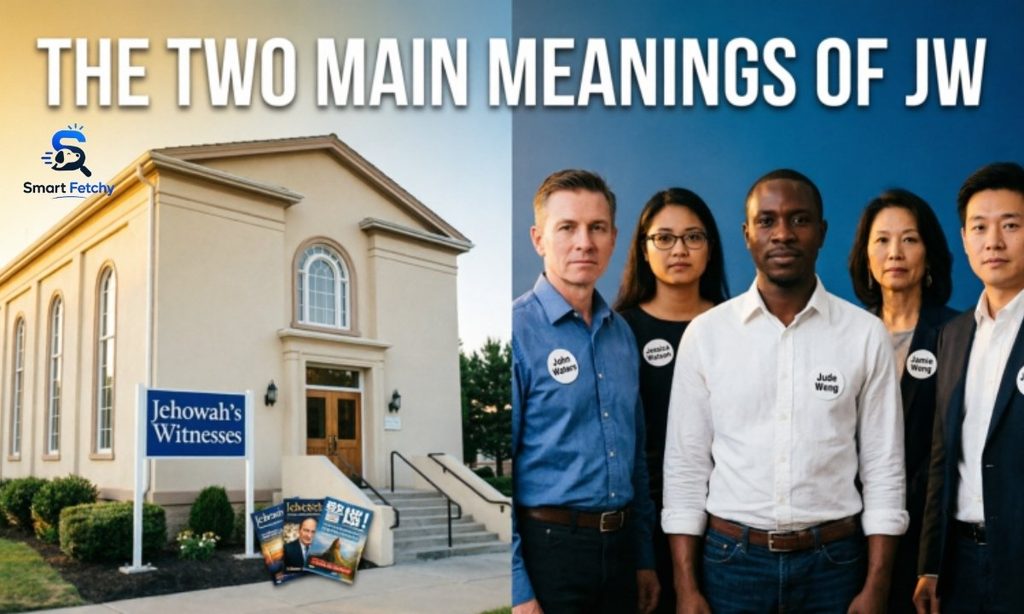
The Two Main Meanings of JW
1. Just Wondering (the everyday meaning)
This is the meaning you will hit almost every time you see JW in a text, comment, or DM. People use it to:
- Ask a casual question without sounding pushy
- Soften a question that might otherwise feel blunt
- Show genuine curiosity rather than judgment
- Ease into a topic that could feel sensitive
Example texts:
- “jw, did you end up going to the concert?”
- “Not trying to pry, jw what happened with the interview”
- “jw if you’re still coming this weekend”
2. Jehovah’s Witnesses
In religious, community, or church related conversations, JW is shorthand for Jehovah’s Witnesses, a Christian denomination known for door to door ministry and its own Bible translation. You will usually see this usage in forums, religious discussion boards, or conversations that are already about faith and denominations.
Example:
- “My neighbor is a JW and stopped by to talk about their beliefs.”
- “There’s a JW Kingdom Hall two blocks from my house.”
Read Slang : GWT Meaning in Text
How to Tell Which Meaning Is Being Used
Context almost always makes the meaning obvious. Here is a simple way to check:
| Situation | Likely Meaning |
| Casual chat, question at the end of a sentence | Just Wondering |
| Message about religion, church, or beliefs | Jehovah’s Witnesses |
| Comment on social media asking for info | Just Wondering |
| Discussion involving denominations or ministry | Jehovah’s Witnesses |
| Text from a friend with no religious context | Just Wondering |
If nothing in the conversation relates to religion or faith, you can safely assume JW means “Just Wondering.”
How JW Is Actually Used in Texting
JW almost always shows up right before or right after a question. It rarely stands alone. Here are common patterns people use.
As a lead in: “jw, what time does the store close?”
Mid sentence: “Are you, jw, still planning to move next month?”
As a soft follow up: “No worries either way, jw what you thought of the movie.”
In group chats: “jw who’s driving tonight, just trying to plan”
Notice how in every example, JW is doing the same job. It tells the reader “I’m not trying to start anything, I’m just curious.”
Why People Add JW to a Question
A question by itself can carry more weight than the sender intends. Texting strips out tone of voice, facial expressions, and body language, so words have to do all the work. Adding JW helps in a few specific ways:
- It signals low stakes. The person is not expecting a detailed explanation.
- It reduces defensiveness. The reader is less likely to feel accused or interrogated.
- It keeps the mood light in casual conversations.
- It gives the other person an easy out if they do not want to answer.
This is especially useful in group chats or with people you do not know very well, where tone can easily be misread.
JW vs Similar Texting Abbreviations
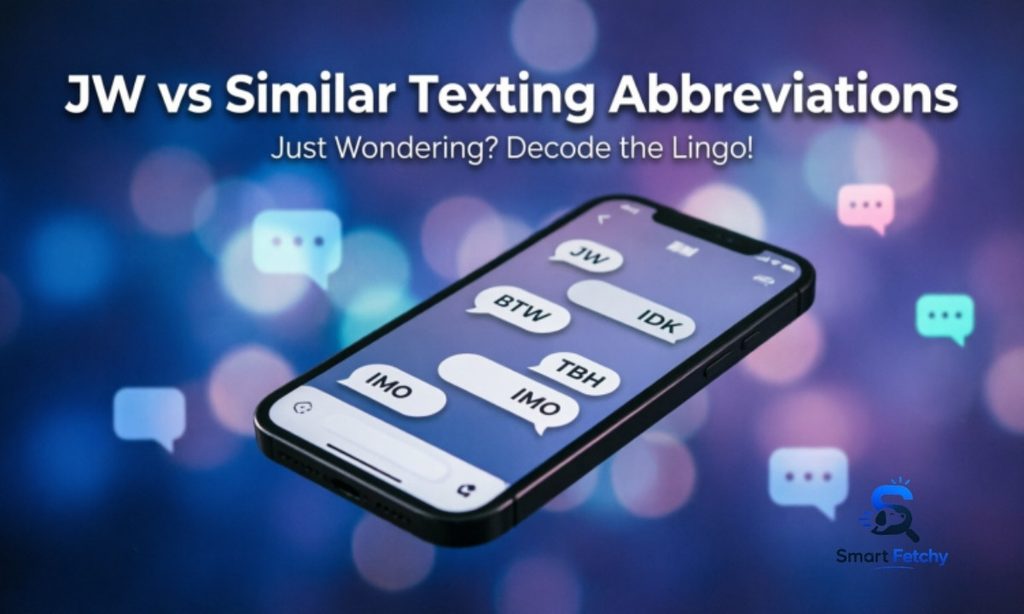
JW is part of a bigger family of texting shortcuts that soften or clarify tone. Here is how it compares to a few common ones.
| Abbreviation | Meaning | Main Use |
| JW | Just Wondering | Softens a casual question |
| FYI | For Your Information | Shares info without expecting a response |
| IMO | In My Opinion | Signals a personal viewpoint |
| TBH | To Be Honest | Introduces a candid or blunt statement |
| IDK | I Don’t Know | Expresses uncertainty |
| NVM | Never Mind | Withdraws a previous question or comment |
| ICYMI | In Case You Missed It | Repeats or highlights earlier info |
The key difference is that JW is almost exclusively about asking a question with a gentler tone, while the others serve different jobs, like sharing an opinion or admitting uncertainty.
Common Mistakes People Make With JW
Even though JW is simple, a few mix ups happen often enough to mention.
Confusing it with “Just Wait.” Some readers, especially those newer to texting slang, assume JW means “just wait.” It does not. In almost every texting context, JW means “just wondering.”
Using JW in serious or emotional conversations. If someone is upset, grieving, or discussing something sensitive, tacking “jw” onto a question can come across as dismissive, even if that is not the intent. In these moments, writing out a full, thoughtful question works better than shorthand.
Overusing it in one conversation. Using JW in nearly every message can start to feel repetitive or even passive aggressive, especially if every question is followed by “jw, no pressure though.” One or two uses per conversation is plenty.
Assuming it always means Jehovah’s Witnesses. Outside of religious contexts, this reading is rare. Defaulting to “Just Wondering” is the safer assumption unless the conversation is clearly about faith or denominations.
Is JW Rude or Sarcastic?
No. JW is designed to do the opposite of sound rude. It exists specifically to soften a question and remove any sense of pressure or judgment. The tone of JW is casual and low key, not confrontational.
That said, tone can still be shaped by everything around it. “jw why you’d do that” written in all caps with no punctuation reads very differently from “jw, curious what made you decide that.” The abbreviation itself is neutral. The words around it carry the real tone.
JW in 2026: What Has Changed
Texting slang keeps evolving, and a few shifts are worth knowing about heading into 2026.
AI chat assistants recognize JW as a standard soft opener. Predictive text and AI writing tools now commonly suggest JW as a way to rephrase blunt questions, which has pushed the abbreviation into more mainstream, non-Gen Z use across a wider age range.
JW shows up more in professional messaging apps, but with caution. Slack and Teams messages sometimes borrow casual texting shorthand, including JW, especially in informal internal channels. It is still best avoided in client facing or formal written communication.
Voice to text has increased spoken use of “jw.” As more people dictate texts instead of typing them, some now say “j-w” out loud as a verbal shortcut in casual speech, particularly among younger texters, treating it almost like its own mini word rather than an abbreviation to spell out.
Short form video captions use JW as a caption tag. On platforms where captions are short and space matters, creators use JW to flag posts that are genuinely just asking a question, distinguishing them from posts meant to stir debate.
These shifts do not change the core meaning. “Just Wondering” is still the dominant use. But the contexts where you will see JW have broadened beyond pure texting.
Frequently Asked Questions
Is JW Used the Same Way on Every Platform?
Mostly, yes. Whether it shows up in a text message, an Instagram comment, a Discord server, or a TikTok caption, JW almost always means “Just Wondering.” The tone stays casual across platforms. The only real exception is religious or church related spaces, where it can refer to Jehovah’s Witnesses instead.
Does JW Ever Mean Something Else Entirely?
Occasionally, JW appears as someone’s initials, a brand abbreviation, or a reference tied to a specific fandom or community. If JW does not make sense as “Just Wondering” or “Jehovah’s Witnesses” given the conversation, it is worth asking the sender directly what they meant rather than guessing.
Should You Use JW in Formal Writing?
No. JW belongs in casual texting and informal chat. In emails, cover letters, reports, or any formal writing, spell out the full question instead. Abbreviations like JW can come across as unprofessional outside of relaxed, conversational settings.
What Should You Reply When Someone Texts You JW?
Just answer the question naturally. JW is a tone softener, not a special request, so you do not need to acknowledge the abbreviation itself. A simple, direct answer to whatever they asked is exactly what is expected.
Is JW Considered Gen Z Slang?
Not exclusively. JW has been used across text messaging for close to two decades, which makes it more of a general internet and texting abbreviation than slang tied to one generation. It is common among younger texters, but plenty of older users rely on it too.
Quick Reference: JW Cheat Sheet
- JW usually means Just Wondering
- In religious contexts, JW can mean Jehovah’s Witnesses
- Used to soften questions and reduce pressure on the reader
- Best used in casual texts, DMs, and comments
- Avoid it in serious, emotional, or formal conversations
- Do not overuse it in a single conversation
- Context, not the letters themselves, determines the meaning
Conclusion
JW is a small abbreviation that does a lot of work. In almost every text message, comment, or DM, it means “Just Wondering,” and its whole purpose is to make a question feel lighter and less demanding. The Jehovah’s Witnesses meaning only applies in conversations that are already about religion or faith, so context will guide you nearly every time.
Now that you know both meanings and how to use JW naturally, you will never have to pause and wonder what it means again. Use it when you want to ask something casually, skip it when the topic is serious, and you will get the tone right every time.

Welcome to SmartFetchy.com your go-to source for heartfelt prayers, inspiring prayers, meaningful quotes, and uplifting messages for every special moment. We create thoughtful and easy-to-share content that helps you express love, gratitude, faith, and happiness with the right words.