IMO Meaning Explained: The Perfect Guide You Need (2026)
If you have scrolled through a group chat, a comment section, or a Discord thread, you have probably seen someone type “IMO” before sharing a thought. It is one of the most common abbreviations online, yet plenty of people still hesitate before using it because they are not fully sure what it means or when it fits.
This guide breaks down the IMO meaning in plain language, shows you how it is used across different platforms, compares it to similar terms like IMHO, and covers the less common meanings you might run into outside of texting.
Quick Answer: What Does IMO Mean
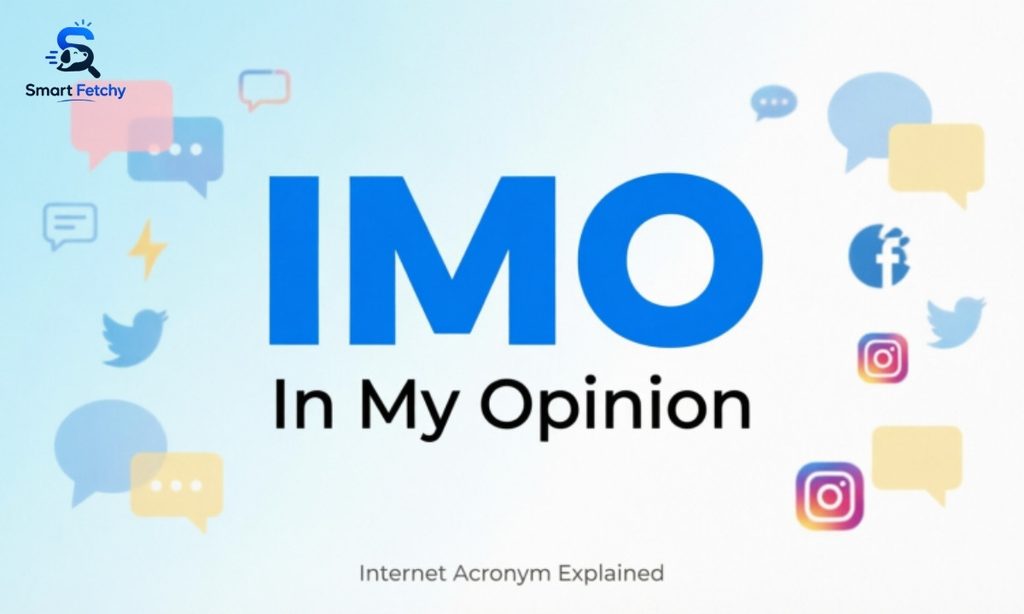
IMO stands for “In My Opinion.” It is an internet abbreviation used to show that a statement is a personal viewpoint rather than a stated fact. People add it before or after a sentence in texts, comments, and chats to soften an opinion and make it clear they are open to disagreement.
That short definition covers the core meaning. The rest of this guide goes deeper into how, where, and when to actually use it.
Where IMO Came From
IMO is not a new term. It has roots in early internet forums and instant messaging platforms from the late 1990s and early 2000s, back when typing speed mattered and abbreviations saved real time. As texting and social media grew, IMO carried over naturally because it solved the same problem: expressing a personal take quickly without sounding too forceful.
By the mid 2000s, it had become a fixture of blogs, forums, and chat rooms. Today it shows up everywhere from text messages to TikTok captions, and it has stayed remarkably stable in meaning compared to slang terms that shift every year.
Read Meaning : PMO Meaning
Why People Use IMO Instead of Just Saying Their Opinion
There is a simple reason IMO has stuck around for two decades: it does a lot of social work in three letters.
- It softens a statement so it does not sound like a demand or a fact.
- It signals that the speaker knows other people might see things differently.
- It is faster to type than “in my opinion” or “I think.”
- It keeps the tone casual and friendly, which matters in group chats and comment threads.
Saying “the sequel was better” reads like a claim. Saying “IMO, the sequel was better” reads like an invitation to talk about it.
IMO Meaning by Platform
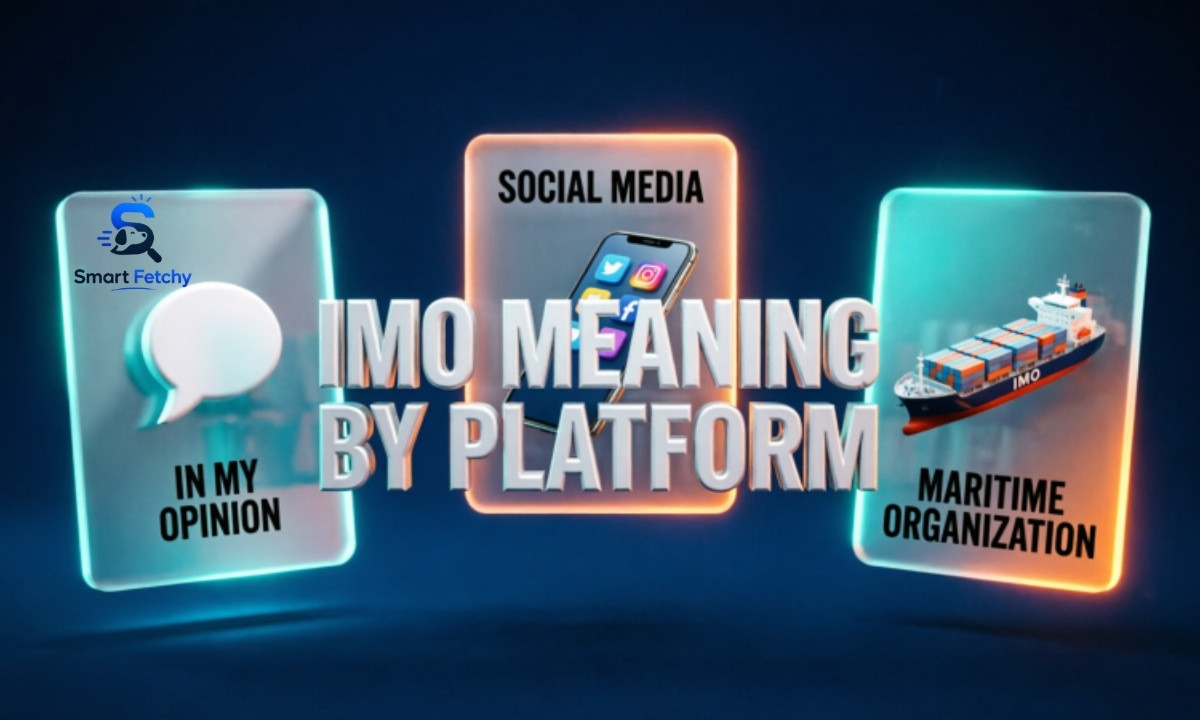
The core meaning of IMO does not change across apps, but how often people use it and in what tone can shift slightly depending on where you are.
| Platform | Typical Use | Tone |
| Text messages | Casual opinions between friends or family | Relaxed, personal |
| Instagram and Twitter/X | Comments and captions sharing a take | Public, sometimes debate-driven |
| TikTok | Comment sections reacting to videos | Quick, often paired with emojis |
| Discord and gaming chats | Opinions during discussions or debates | Informal, fast-paced |
| Reddit and forums | Adding a personal view to a longer discussion | Slightly more detailed, still casual |
| Workplace chat tools like Slack | Occasionally used in informal internal messages | Semi-casual, avoided in formal threads |
Across every platform, the placement is flexible. People use it at the start of a sentence, in the middle, or tacked on at the end. All three are correct.
Read Also : Habibi Meaning
IMO vs IMHO vs Similar Abbreviations
IMO often gets grouped with a handful of related terms. Here is how they actually differ.
| Abbreviation | Full Meaning | Tone Difference |
| IMO | In my opinion | Neutral, standard opinion marker |
| IMHO | In my humble opinion | Adds a touch of modesty or politeness |
| IMNSHO | In my not so humble opinion | Used jokingly to signal a strong or blunt take |
| IMCO | In my considered opinion | Suggests the opinion is thought through |
| TBH | To be honest | Signals candor rather than opinion specifically |
IMHO is the closest cousin to IMO, and the two are often used interchangeably. The small difference is that IMHO leans slightly more polite or self-aware, while IMO is more of a plain, neutral marker.
Other Meanings of IMO You Should Know
“In my opinion” is by far the most common meaning, but IMO is also an acronym used in several unrelated fields. Context almost always makes the meaning obvious, but it helps to recognize these so you are not caught off guard.
| Field | What IMO Means | Where You Would See It |
| Texting and social media | In my opinion | Chats, comments, captions |
| Shipping and maritime industry | International Maritime Organization | Shipping regulations, vessel safety documents |
| Insurance and finance | Independent Marketing Organization | Insurance agent contracts and marketing materials |
| Mathematics | International Mathematical Olympiad | Academic competitions for students |
| Corporate mergers | Integration Management Office | Business documents during company mergers |
| Messaging apps | imo (a video and chat app) | App store listings, app names |
| Medical documentation | Various clinical shorthand, context dependent | Health records, medical software |
If you see IMO in a business email about a merger, it almost certainly does not mean “in my opinion.” If you see it in a group chat, it almost always does.
How to Use IMO Correctly
Using IMO well comes down to placement and context. Here are a few real examples showing natural usage.
- “IMO, the new update makes the app slower.”
- “That restaurant is overpriced, IMO.”
- “IMO the movie dragged in the second half, but the ending saved it.”
- “Honestly, IMO we should push the deadline back a week.”
Notice that punctuation around IMO is flexible. A comma after it is common but not required, and plenty of casual writers skip it entirely.
When Not to Use IMO
IMO works well in casual settings, but it is not built for every context. Avoid it in these situations:
- Formal emails or business proposals
- Academic writing or research papers
- Professional reports where clarity and authority matter
- Legal or official documents
- Any communication where casual abbreviations could be misread as unprofessional
If you are writing something formal and want the same softening effect, spell out “in my opinion” or use a phrase like “I believe” or “from my perspective” instead.
Common Mistakes People Make With IMO

A few small missteps come up often enough to mention.
- Overusing it in a single message. Adding IMO to every sentence in a paragraph weakens the writing instead of adding nuance.
- Using it in professional writing. It reads as too casual in emails to clients, coworkers you do not know well, or anyone in a formal setting.
- Confusing it with the messaging app “imo.” The lowercase app name and the uppercase abbreviation are unrelated, and mixing them up in conversation can cause confusion.
- Assuming it always softens a rude comment. Prefacing an insult with IMO does not make it polite. Tone still matters more than the abbreviation.
IMO in 2026: What Has Changed
Slang terms tend to fade quickly, but IMO has held steady, and 2026 usage data shows a few notable shifts worth knowing.
- AI chat assistants and comment tools now recognize IMO natively, often expanding it automatically or offering tone suggestions when users type it in drafts, which has kept the term visible even as new slang appears around it.
- Short-form video platforms have increased its use in captions, not just comments, as creators add “IMO” directly to on-screen text when sharing takes and reviews.
- Voice-to-text and predictive typing tools now suggest IMO automatically in casual message threads, which has made it even easier to type than the ten years prior.
- Workplace messaging norms have loosened slightly, with IMO appearing more often in internal Slack or Teams messages among younger employees, though it is still avoided in client-facing communication.
- The abbreviation remains one of the most stable pieces of internet slang, showing almost no change in core meaning since the early 2000s, unlike many terms that shift meaning every couple of years.
These shifts do not change what IMO means, but they show it is still very much active and evolving in how it gets used rather than fading out.
Frequently Asked Questions
What does IMO mean in a text message?
IMO means “in my opinion” in a text message. It signals that the sentence following it is a personal view rather than a stated fact.
Is IMO rude to use?
No, IMO is not rude on its own. It is generally used to soften a statement and make it clear the sender is aware their view might differ from others.
What is the difference between IMO and IMHO?
IMO means “in my opinion” while IMHO means “in my humble opinion.” Both express a personal viewpoint, but IMHO carries a slightly more modest or polite tone.
Can I use IMO in a work email?
It is best to avoid IMO in formal emails or professional documents. Spell out “in my opinion” instead if you want the same effect in a business context.
Does IMO mean the same thing on every platform?
Yes, the meaning stays the same whether it is used on Instagram, TikTok, Discord, or in a text message. Only the tone and frequency of use shift slightly by platform.
What does IMO stand for outside of texting?
Outside of slang, IMO can stand for the International Maritime Organization, Independent Marketing Organization, International Mathematical Olympiad, or Integration Management Office, depending on the field.
Final Thoughts
IMO is a simple, well-established piece of internet shorthand that means “in my opinion.” It is easy to use, works across nearly every messaging platform, and helps soften a personal take without sounding demanding. The only real rule to remember is context: keep it in casual conversations and swap it out for the full phrase when you are writing something formal.
Once you know that, you will never second-guess seeing it in a chat again.

Welcome to SmartFetchy.com your go-to source for heartfelt prayers, inspiring prayers, meaningful quotes, and uplifting messages for every special moment. We create thoughtful and easy-to-share content that helps you express love, gratitude, faith, and happiness with the right words.