
NGL Meaning: The Powerful Truth Behind This Popular Slang in 2026
If you have scrolled through Instagram, TikTok, or a group chat recently, you have probably seen the letters “NGL” pop up somewhere. Maybe a friend used it before dropping an honest opinion, or you saw it as the name of an anonymous messaging app on someone’s story. Either way, you are not the only one who paused and wondered what it actually means.
This guide breaks down the real meaning of NGL, how people use it today, where it came from, and why it is still one of the most common pieces of internet slang in 2026.
What Does NGL Mean?

NGL stands for “not gonna lie.” It is used online and in texting to introduce an honest, sometimes blunt, statement or opinion. People add it before or after a sentence to signal that what follows is their genuine, unfiltered thought, even if it might be slightly awkward or unpopular to say out loud.
That is the short answer. Now let us look at how it is actually used, where it started, and how it fits into the bigger picture of internet slang today.
Read Now: POV Meaning
Where NGL Comes From and Why It Caught On
NGL is not a brand new term. It has roots going back further than most people assume. The abbreviation showed up in online slang dictionaries as early as the late 2000s, tucked inside longer phrases before it became a standalone term people typed on its own.
It really took off with the rise of texting culture and short-form social media. As typing speed and character limits became part of everyday communication, phrases got compressed into acronyms. NGL fit naturally into that trend because it is short, easy to type, and instantly understood by most people under a certain age.
By the time platforms like Twitter, Instagram, and TikTok became dominant, NGL had already settled into daily use. Today, it shows up in captions, comment sections, texts, and even casual spoken conversation among younger generations.
How People Actually Use NGL
NGL usually appears at the start of a sentence, though it can also be tucked in at the end. It works as a softener, a way to prepare the listener or reader for something honest that might otherwise feel too direct.
Here are some common ways people use it:
- Confessions: “NGL, I forgot your birthday last week.”
- Compliments that feel almost involuntary: “NGL, that outfit is fire.”
- Blunt criticism, softened slightly: “NGL, that movie was kind of a letdown.”
- Reactions to something surprising: “NGL, I did not expect that ending.”
- Casual agreement with a hint of surprise: “NGL, you might be right about this one.”
In each case, NGL is doing the same job: telling the other person that honesty is coming, even if it is a little uncomfortable.
NGL in a Sentence: Quick Examples
| Situation | Example Sentence |
| Texting a friend | “NGL, I’m nervous about tomorrow.” |
| Commenting on social media | “NGL, this is the best thing I’ve seen all week.” |
| Giving feedback at work (casual settings only) | “NGL, the deck needs a bit more polish.” |
| Reacting to news | “NGL, I did not see that coming.” |
| Admitting a mistake | “NGL, I totally forgot to reply.” |
NGL vs Similar Slang Terms
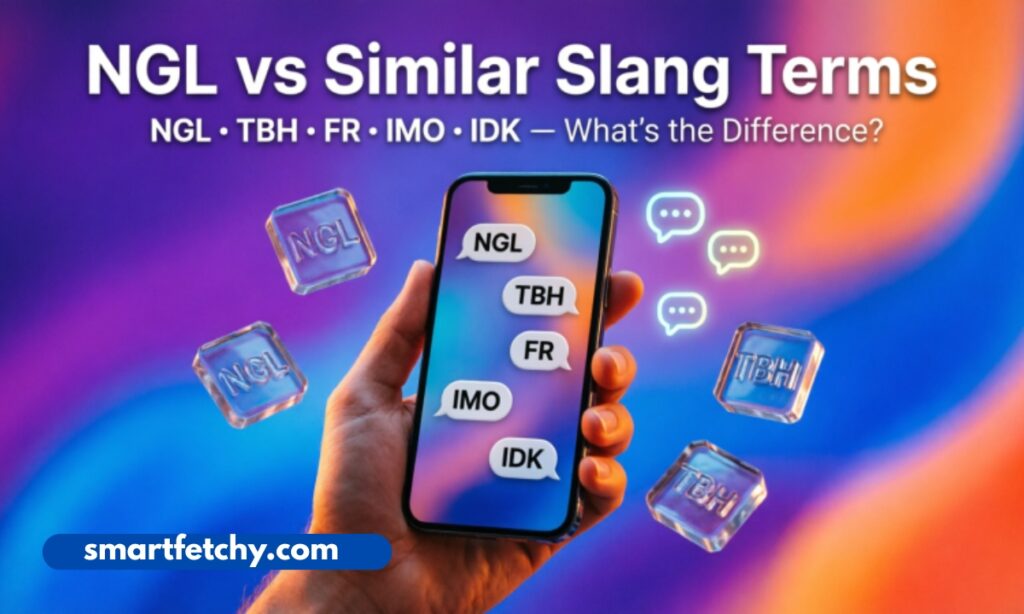
NGL is often grouped with other honesty-signaling phrases, but each one carries a slightly different tone. Here is how they compare.
| Term | Full Meaning | Typical Tone |
| NGL | Not gonna lie | Honest, sometimes blunt |
| TBH | To be honest | Honest, slightly more formal |
| IMO | In my opinion | Neutral, opinion based |
| FR | For real | Emphasizing sincerity or agreement |
| NGL FR | Not gonna lie, for real | Extra emphasis on honesty |
Understanding these differences helps you pick the right tone depending on the conversation. NGL tends to feel a bit more casual and personal than TBH, while IMO is more about stating an opinion than confessing something.
More Meaning : NTM Meaning in Text
Formal Alternatives to NGL
NGL is great for texting and casual chat, but it does not belong in professional writing, emails, or formal documents. If you need to express the same idea in a more polished way, try one of these instead:
- “Honestly” or “To be honest”
- “Frankly speaking”
- “I have to admit”
- “In all honesty”
- “If I am being candid”
These alternatives carry the same spirit of transparency without sounding out of place in a workplace or academic setting.
The NGL App: What Happened and Why It Matters in 2026
Beyond the slang term, NGL is also the name of an anonymous Q&A app that exploded in popularity around 2022. It let people post a link on their Instagram story and receive anonymous messages, playing on the same idea of unfiltered honesty that the slang term represents.
Here is what most articles on this topic leave out, and what has changed more recently:
- The app faced serious backlash after reports revealed it sent fake, automated messages to users designed to look like real anonymous submissions, encouraging people to pay for a subscription to “reveal” who sent them.
- Regulators stepped in. The company agreed to a multi million dollar settlement and was required to stop offering the app to users under eighteen, following concerns about how it targeted teenagers.
- In late 2025, the NGL app itself was acquired by another mobile company, marking the end of its run as an independent product following years of controversy.
- Since then, interest has shifted toward anonymous messaging built directly into platforms people already trust, such as bots and mini apps inside larger messaging services, rather than standalone apps asking for personal data.
This context matters because a lot of people searching for “NGL meaning” are actually trying to understand the app, not just the slang. Knowing the difference, and knowing what happened to the app, gives you the full picture instead of an outdated one.
Is NGL Appropriate to Use in Professional Settings?
Generally, no. NGL is casual internet slang and fits naturally into texts, social captions, and informal conversations with friends or peers. It is not suited for emails, reports, resumes, or formal presentations.
That said, workplace culture varies. In relaxed, informal team chats such as Slack or Discord among colleagues who already text casually, a well placed NGL might be fine. When in doubt, default to a formal alternative like “honestly” or “to be honest.”
Common Mistakes People Make With NGL

A few small missteps show up often enough to be worth mentioning:
- Using it in formal writing: Cover letters, official emails, and academic papers are not the place for NGL.
- Confusing it with the app: The slang term and the anonymous messaging app share a name, but they are not the same thing, especially now that the app has changed hands.
- Overusing it in one message: Dropping NGL into every other sentence dilutes its impact. It works best as an occasional signal, not a constant filler.
- Assuming everyone knows it: Older readers, non native English speakers, or people less active on social media may not immediately recognize the term. Context clues help.
Read Also : ABG Meaning Explained
What does NGL mean in texting?
In texting, NGL means “not gonna lie.” It signals that the sender is about to share something honest, whether that is a confession, an opinion, or a reaction, often something they might normally hold back.
Is NGL rude or offensive?
NGL is not inherently rude. It is typically used to soften honesty, not to attack someone. However, tone still matters. The words that follow NGL can be blunt or critical, so context and delivery decide whether it comes across as playful or harsh.
Can NGL be used at the end of a sentence?
Yes. While NGL is more common at the start of a sentence, it also works at the end, as in “That was tough, NGL.” Both placements carry the same honest, confessional tone.
Is the NGL app still active in 2026?
The original NGL app went through major changes after regulatory action limited it from being offered to minors and it was later acquired by another company. Many users have since moved toward anonymous messaging features built into platforms like Telegram rather than relying on the original standalone app.
What is the difference between NGL and TBH?
Both mean roughly the same thing, introducing an honest statement. NGL tends to feel slightly more casual and personal, often used before admitting something a bit awkward, while TBH can feel a touch more neutral or formal in comparison.
Does NGL have a negative meaning?
No. NGL itself is neutral. It simply flags honesty. The sentiment of the message, whether positive, negative, or neutral, comes from the words that follow it, not from the acronym itself.
Final Thoughts
NGL is a simple three letter acronym that carries a clear job: introduce honesty. Whether it is used to soften criticism, share a genuine reaction, or admit something slightly embarrassing, it has become a normal part of how people communicate online and through text.
Beyond the slang, the NGL app’s story is a useful reminder that names in internet culture can carry double meanings, and that staying current means knowing both the everyday phrase and the platform that shares its name. Use NGL where it fits, keep it out of formal writing, and you will be using this slang exactly the way it was meant to be used.

Welcome to SmartFetchy.com your go-to source for heartfelt prayers, inspiring prayers, meaningful quotes, and uplifting messages for every special moment. We create thoughtful and easy-to-share content that helps you express love, gratitude, faith, and happiness with the right words.