
FEIN Meaning Explained: Discover Its True Meaning 2026
If you are starting a business, hiring your first employee, or opening a business bank account in the United States, you have probably come across the term FEIN. It shows up on tax forms, loan applications, and payroll paperwork, yet most people never get a plain answer about what it actually means.
This guide breaks down the FEIN meaning in simple terms, explains how it differs from an EIN, and walks you through everything you need to know about getting and using one in 2026.
What Does FEIN Mean?
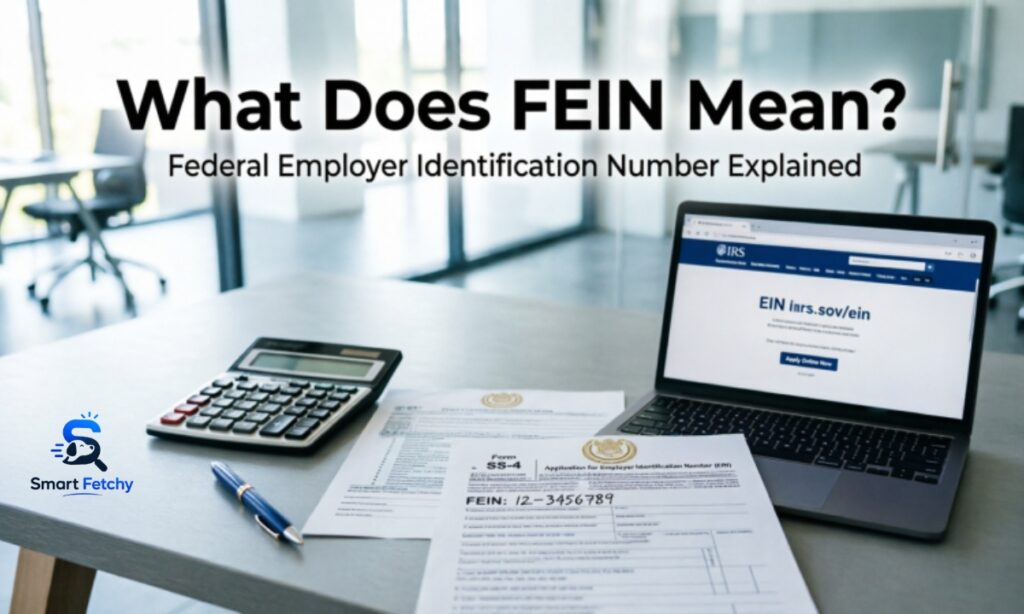
FEIN stands for Federal Employer Identification Number. It is a nine digit number, formatted as XX-XXXXXXX, that the IRS issues to identify a business for federal tax purposes. Think of it as a Social Security number for a company rather than a person.
That short definition covers the core of it, but there is more to understand about how the number works, who needs one, and how it fits into the wider world of US tax identification.
Read Now: PSA Meaning Explained
Why the FEIN Meaning Confuses So Many People
Search online and you will see FEIN, EIN, Federal Tax ID, and Taxpayer Identification Number used almost interchangeably. That overlap is exactly why so many business owners get stuck trying to pin down what the term really refers to.
Here is the honest answer. In practice, FEIN and EIN refer to the same nine digit number issued by the Internal Revenue Service. The word Federal simply points out that the number comes from the national tax authority rather than a state agency. Some states also issue their own state identification numbers, and those are sometimes loosely called EINs too, which adds to the confusion.
Once you understand this at its core, the terminology stops being confusing. It is one identifier, issued once, used for federal tax reporting, payroll, banking, and business credit.
FEIN vs EIN: Is There Really a Difference?
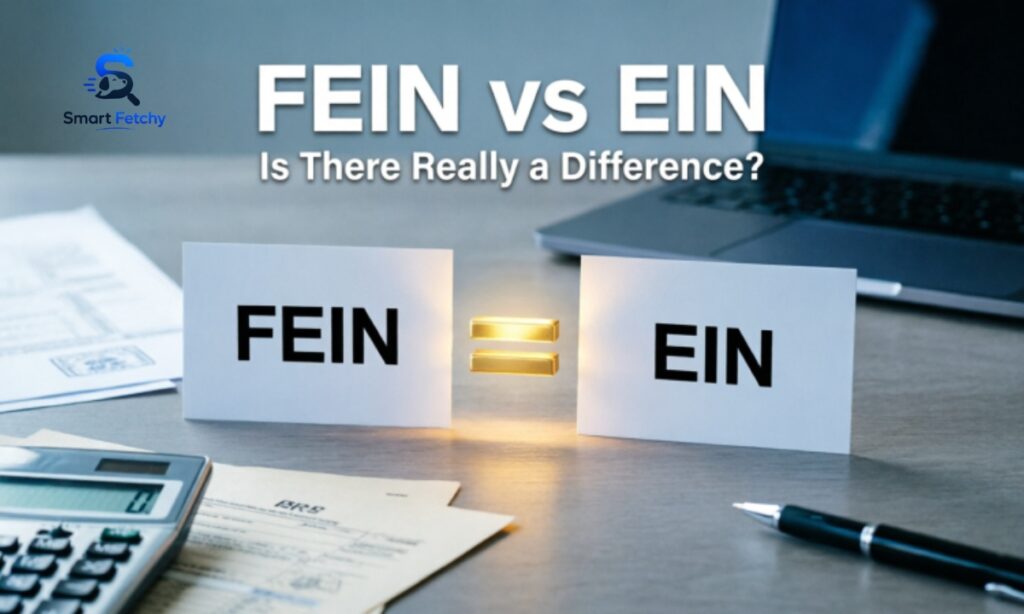
For almost every practical purpose, no. A FEIN and an EIN are the same number. The IRS itself uses the term EIN on its official forms, while many private companies, banks, and payroll providers use the longer version to be extra clear that the number is federal in nature.
| Term | Full Name | Issued By | Used For |
| FEIN | Federal Employer Identification Number | IRS | Federal tax filing, payroll, banking |
| EIN | Employer Identification Number | IRS | Same purpose, more common phrasing |
| State ID Number | State Tax Identification Number | State tax agency | State level tax filing in some states |
| SSN | Social Security Number | Social Security Administration | Personal identification for individuals |
| ITIN | Individual Taxpayer Identification Number | IRS | Personal tax identification for non citizens |
The table above makes it easier to place this term next to the other identifiers you might run into while setting up a business. Only the FEIN and EIN labels refer to the exact same federal number. The rest serve different purposes entirely.
Read Also: SYFM Meaning Explained
Who Needs a FEIN?
Not every business is legally required to have one, but most end up needing it anyway. Here is a quick breakdown of who must apply.
- Corporations, including C corporations and S corporations
- Partnerships and multi member LLCs
- Any business that hires employees
- Nonprofits, trusts, and estates
- Businesses that file employment, excise, or alcohol, tobacco, and firearms tax returns
- Foreign companies doing business in the United States
Sole proprietors with no employees are usually allowed to use their Social Security number instead. Even so, getting one is often the smarter move. It keeps your personal SSN off vendor forms, bank paperwork, and public filings, which lowers your exposure to identity theft.
The Real World FEIN Meaning for Small Business Owners
Beyond the technical definition, this translates into something very practical for anyone running a company. It is the number that:
- Identifies your business on federal tax returns
- Lets you open a business bank account
- Allows you to hire and pay employees legally
- Is required to apply for most business licenses and permits
- Helps you build business credit separate from your personal credit
- Is requested by vendors, clients, and lenders before they will work with you
Without this number, many banks will not open a business account, and many payroll systems simply will not run. That is the practical side that most short definitions leave out.
How to Apply for a FEIN in 2026
Applying is free, and the process has stayed fairly consistent, though the IRS has tightened a few identity verification steps in recent years. Here is the current process.
Step 1: Determine Your Eligibility
You can apply if your business is located in the United States or a US territory and you already have a valid Social Security number, ITIN, or existing EIN as the responsible party.
Step 2: Complete Form SS-4
Form SS-4, Application for Employer Identification Number, asks for basic details about your business structure, the reason you are applying, and your responsible party information.
Step 3: Identify Your Responsible Party
Every application must name a responsible party, meaning the individual who ultimately owns or controls the business and its funds. This must be a real person, not another company, unless the applicant is a government entity. If your business structure changes ownership or leadership, the IRS requires you to update this information within 60 days using Form 8822-B.
Step 4: Choose an Application Method
You have four ways to apply:
- Online through the IRS website, which is the fastest option and issues your number immediately if you qualify
- Fax, available to applicants who cannot use the online tool, including most non-resident applicants
- Mail, which is the slowest method and can take several weeks
- Phone, available only to international applicants without a US address
Step 5: Receive Your Confirmation
Once approved, the IRS sends a confirmation notice by mail confirming your Federal Employer Identification Number. Keep this letter with your permanent business records since you will need it for banking, licensing, and tax filings going forward.
FEIN Format and Structure
A FEIN always follows the same nine digit pattern, formatted as two digits, a hyphen, then seven digits, for example 12-3456789. Unlike Social Security numbers, the first two digits historically indicated the region where the number was issued, though the IRS moved to a more centralized system years ago, so this pattern is less meaningful today.
Understanding what this number means also means understanding what it is not. It is not your tax bracket, it does not indicate your business size, and it carries no expiration date. Once assigned, it belongs permanently to that business entity.
What Happens If You Lose Your FEIN?
It happens more often than you would think. If you misplace it, you have a few reliable ways to track it down.
- Check the original confirmation notice the IRS mailed when the number was issued
- Look at previously filed tax returns, since it appears on every one
- Check your business bank account paperwork, since banks require it to open the account
- Call the IRS Business and Specialty Tax Line directly to request it
You should never need to reapply for a new FEIN just because you lost the original number. It stays tied to your business permanently.
FEIN Meaning Across Different Business Structures
The way this requirement applies can shift slightly depending on your business type, so here is a quick comparison.
| Business Type | Is FEIN Required | Notes |
| Sole Proprietorship, no employees | Optional | SSN can be used instead |
| Sole Proprietorship, with employees | Required | Needed for payroll tax filing |
| Partnership | Required | Needed regardless of employee count |
| LLC, single member | Optional in most cases | Required if electing corporate tax status |
| LLC, multi member | Required | Treated as a partnership for tax purposes |
| Corporation | Required | Applies to both C corps and S corps |
| Nonprofit organization | Required | Needed even before receiving tax exempt status |
What Is New With FEINs in 2026

A few updates are worth knowing if you are applying for or managing one this year.
Stricter responsible party verification. The IRS continues to tighten identity checks for the responsible party listed on Form SS-4. Nominees are not permitted to serve in this role, and the person named must have genuine control over the entity’s funds and decisions, not just a title.
Faster online processing, but limited hours. The IRS online EIN application remains the quickest route and generally issues the number the same day, but the tool is still only available during specific hours and only to applicants with a US taxpayer identification number.
Non-resident applicants still rely on faxes. Business owners outside the United States without an SSN or ITIN continue to use Form SS-4 by fax, since the online system requires a US based taxpayer ID to complete the application.
Beneficial ownership reporting overlap. Many businesses that apply for one also fall under separate beneficial ownership reporting requirements, meaning the responsible party listed on your application may need to match the individual reported to other federal agencies. It is worth double checking that your records stay consistent across filings.
The 60 day update rule remains strict. If your responsible party changes for any reason, ownership transfer, new managing member, or leadership change, you are still required to file Form 8822-B within 60 days. There is no formal penalty for missing this deadline, but it can lead to missed IRS notices and delayed correspondence, which creates its own compliance headaches.
Staying current on these details rounds out the practical meaning behind this term for business owners operating in 2026, not just the textbook definition.
Common Mistakes to Avoid With Your FEIN
- Applying for a new number when your business structure has not actually changed
- Using a nominee instead of the true responsible party on your application
- Forgetting to update the IRS after a change in ownership or leadership
- Mixing up this number with a state tax ID number when filing state returns
- Sharing this number carelessly, since it can be misused for fraud similar to an SSN
FEIN Meaning: Quick Recap
- FEIN stands for Federal Employer Identification Number
- It is a nine digit number issued by the IRS
- FEIN and EIN refer to the same number in almost every practical situation
- Most businesses with employees, partnerships, and corporations are required to have one
- Applying is free and can be completed online, by fax, mail, or phone
- The number is permanent once issued and never expires
Frequently Asked Questions About FEIN Meaning
What does FEIN stand for?
FEIN stands for Federal Employer Identification Number. It is the nine digit number the IRS assigns to identify a business for federal tax purposes.
Is a FEIN the same as an EIN?
Yes, in almost every practical case. Both terms refer to the same nine digit number issued by the IRS. The word Federal simply emphasizes that the number is issued at the national level rather than the state level.
Do I need this number if I am a sole proprietor?
Not always. If you have no employees and do not operate as a corporation or partnership, you can generally use your Social Security number instead. Many sole proprietors still choose to apply anyway for privacy and banking purposes.
How much does it cost to get a FEIN?
Applying directly through the IRS is completely free. Be cautious of third party websites that charge a fee for what is a no cost government service.
How long does it take to receive one?
If you apply online and qualify, you typically receive your number immediately. Fax applications usually take about four business days, while mailed applications can take several weeks.
Can I use my FEIN for multiple businesses?
No. Each legal business entity needs its own number. If you form a new corporation or partnership, you must apply again even if you already have one for another business.
What if I lose my FEIN?
Check your original IRS confirmation notice, a past tax return, or your business bank paperwork. You can also call the IRS Business and Specialty Tax Line to retrieve it. You will not need to apply for a new one.
Does a FEIN expire?
No. Once the IRS assigns this number to your business, it remains valid permanently, even if the business becomes inactive, as long as the entity itself still exists.
Final Thoughts
The FEIN meaning boils down to one simple idea. It is the federal number that gives your business its own tax identity, separate from your personal Social Security number. Whether you are hiring your first employee, opening a business account, or filing your first corporate tax return, understanding what this term means helps you avoid delays and stay compliant from day one.
If you are still unsure whether your business needs one, the safest move is to apply. It costs nothing, takes only a few minutes online, and protects your personal information the moment you start operating.

Welcome to SmartFetchy.com your go-to source for heartfelt prayers, inspiring prayers, meaningful quotes, and uplifting messages for every special moment. We create thoughtful and easy-to-share content that helps you express love, gratitude, faith, and happiness with the right words.