
MID Meaning (Merchant ID) : The Ultimate Guide to Its Uses in 2026
If you run a business that accepts card payments, you have probably seen the term MID on a statement, a payment gateway dashboard, or a terminal receipt and wondered what it actually means. MID is one of those short abbreviations that carries a lot of weight behind the scenes of every card transaction you process.
This guide breaks down exactly what MID stands for, where you will encounter it, how it works, and why it matters for anyone running an online store, a retail counter, or a subscription business in 2026.
Quick Answer: What Does MID Mean?
MID stands for Merchant Identification Number, also called a Merchant ID. It is a unique code assigned to a business by a payment processor or acquiring bank so that every card transaction can be traced back to the correct merchant account for routing, settlement, and fraud monitoring.
What Does MID Stand For?

MID is short for Merchant Identification Number. Outside of payments, the same three letters can stand for other things, so context matters. Before going deeper into the payment meaning, here is a quick look at where else you might spot the abbreviation.
MID in Payments (The Most Common Meaning)
In the payments and finance world, MID almost always refers to a Merchant Identification Number. This is the meaning most businesses, freelancers, and finance teams are searching for, and it is the focus of the rest of this guide.
Other Meanings of MID You Might Come Across
- Master of Industrial Design – an academic degree offered by some design schools.
- Mobile Internet Device – an older term for small handheld computers built mainly for browsing and media.
- Media Identification Code – a manufacturer code stamped on optical discs such as DVDs.
- MapInfo Interchange Format – a file extension used in older mapping software.
- Casual slang “mid” – used in everyday conversation and on social media to describe something average, neither impressive nor bad.
If someone mentions MID in a business, finance, or e-commerce setting, they are almost certainly talking about a Merchant Identification Number, not the slang term or the design degree.
Click Here To Read PTSO Meaning Explained
What Is a Merchant ID (MID)?
A Merchant Identification Number is a unique string of numbers, and sometimes letters, that a payment processor or acquiring bank assigns to a business when it opens a merchant account. Think of it as a business address inside the card payment network. Every time a customer pays with a debit or credit card, that MID travels along with the transaction so the payment system knows exactly which business should receive the funds.
Without a MID, a business cannot legally or technically accept card payments through a standard merchant account setup. It is the anchor point that connects a sale to a business, a bank account, and a settlement schedule.
How a MID Fits Into a Transaction
Understanding how a MID works makes it easier to see why it matters so much. Here is a simplified version of what happens behind the scenes when a customer taps, swipes, or enters a card online.
- A customer initiates a payment at a terminal, a website checkout, or an app.
- The payment gateway or terminal sends the transaction details, including the MID, to the payment processor.
- The processor forwards the request through the card network to the issuing bank for approval.
- The issuing bank approves or declines the transaction and sends the response back through the same chain.
- Once approved, funds are later settled into the merchant’s bank account, tagged and tracked using the MID.
This entire process usually takes a few seconds, but the MID is present at every step, acting like a tracking number for the transaction’s journey.
MID vs TID vs GID vs MCC: What Is the Difference Meaning?
One of the biggest points of confusion for business owners is how a MID relates to other similar sounding identifiers. They are not interchangeable, and mixing them up can cause real headaches when troubleshooting payment issues. Here is a clear comparison.
| Identifier | Full Name | What It Identifies | Who Sees It |
| MID | Merchant Identification Number | The business itself, within the payment network | Private, found on statements and dashboards |
| TID | Terminal Identification Number | A specific card machine, app, or software instance | Often visible on receipts |
| GID | Gateway Identification Number | The specific payment gateway or network handling the transaction | Mostly internal, used by processors |
| MCC | Merchant Category Code | The type or category of business (retail, restaurant, travel, etc) | Used for interchange rates and risk classification |
| Merchant Account ID | Merchant Account Number | The overall banking relationship with the processor | Private, may cover multiple MIDs |
A simple way to remember the difference: the MID identifies who you are as a business, the TID identifies which device or channel processed the sale, the GID identifies the gateway that carried the request, and the MCC identifies what kind of business you run. A single MID can be linked to multiple TIDs if a business has several terminals, checkout pages, or store locations, but each of those channels still reports back to the same core Merchant ID.
What Does a MID Look Like?
There is no single universal format for a Merchant Identification Number because it depends on the acquirer, processor, or aggregator issuing it. That said, a few patterns are common across the industry.
- Most MIDs are purely numeric and often around 15 digits long.
- Some processors use a mix of numbers and letters, especially platforms that assign sub merchant IDs.
- Aggregators such as Stripe, PayPal, or Square typically process transactions under one master MID for the whole platform, then assign each individual seller a unique sub merchant identifier internally.
- Banks and traditional acquirers usually issue a dedicated MID directly to a business that applies for its own merchant account.
Because there is no fixed global standard, always treat your specific MID format as set by your provider rather than assuming it will match another business’s number.
How to Find Your MID
If you need to locate your Merchant Identification Number, check these common places first.
- Your card terminal. Many physical POS machines have a sticker on the back or bottom listing the MID.
- Monthly merchant statements. The MID is usually printed near the top of the statement, sometimes labeled Merchant Number or Account Number.
- Your payment gateway dashboard. Log into your processor’s online portal and look under account or business settings.
- Onboarding documents. Many providers share the MID through a VAR sheet or welcome packet when the account is first set up.
- Customer support. If you cannot locate it anywhere else, your acquirer or processor’s support team can confirm it after identity verification.
Since a MID is considered sensitive business information, it is not published in any public database, so you will always need to pull it from your own account records.
Types of MIDs Businesses Should Know
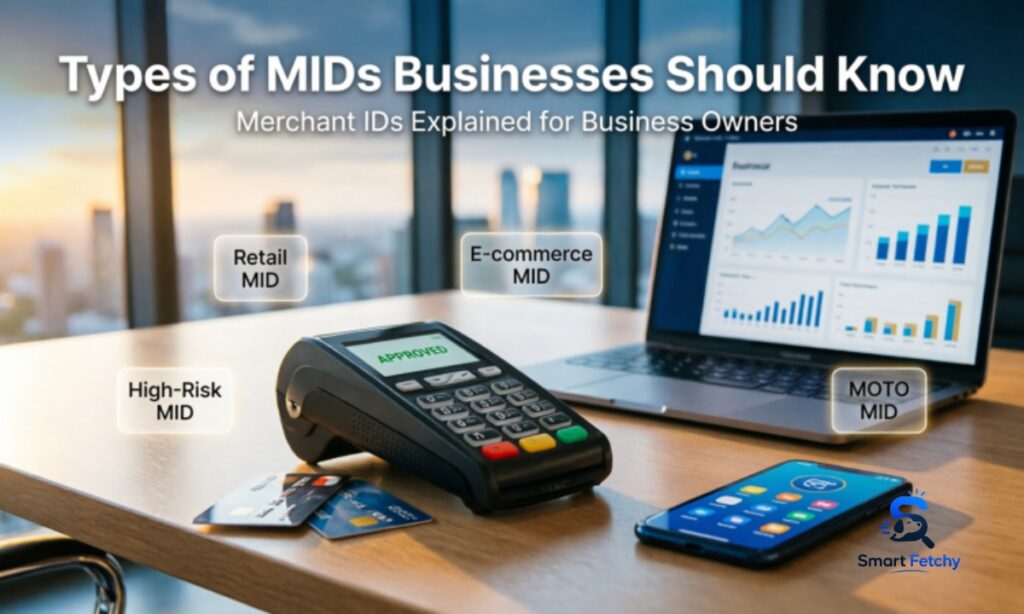
Not every business interacts with MIDs the same way. Understanding which category you fall into helps explain what level of control and visibility you actually have.
Master MID (Aggregator Model)
If you accept payments through a platform like Stripe, PayPal, Square, or a similar aggregator, you are typically processing under that company’s master MID rather than getting your own. This is faster to set up and requires less paperwork, but it also means the platform has more control over your account, including the ability to freeze funds if their risk systems flag unusual activity.
Dedicated MID (Direct Merchant Account)
Businesses that apply directly with an acquiring bank or a payment processor for their own merchant account receive a dedicated MID. This gives more control, often better rates at higher volumes, and a direct relationship with the bank, but it usually involves a more thorough underwriting process.
Multiple MIDs for One Business
Larger businesses, franchises, or companies with several product lines sometimes hold more than one MID. This can help separate risk, reporting, and chargeback tracking between different parts of the operation, so if one MID sees a spike in disputes, it does not automatically put the whole business at risk.
Why a Merchant ID Matters for Your Business
A MID is not just an administrative detail. It plays a direct role in several parts of running a payment friendly business.
- Transaction routing. It ensures funds land in the correct account after every sale.
- Fraud prevention. Card networks monitor activity at the MID level to detect unusual spending patterns or suspicious behavior.
- Chargeback tracking. Disputes and refund rates are measured per MID, which affects your standing with processors.
- Settlement and reporting. Your MID links every transaction to the reports and statements you use for accounting and reconciliation.
- Risk classification. Processors use MID level data, alongside your MCC, to assess how risky your business is to work with.
Because so much rides on this single identifier, protecting it and understanding how it is used is genuinely part of running a healthy payment operation, not just a technical detail for the finance team.
Common Problems Linked to a MID
A few issues tend to come up repeatedly for business owners dealing with MIDs, and knowing them ahead of time can save a lot of stress.
- Excessive chargebacks. If dispute rates climb too high on a single MID, processors may increase fees, hold funds, or terminate the account.
- MID revocation. In serious cases, a merchant account can be closed and the business added to a shared industry list that tracks terminated merchants, making it harder to get approved elsewhere.
- High risk classification. Certain industries or sudden spikes in transaction volume can trigger a high risk label, leading to higher processing fees or reserve requirements.
- Confusing MID with other identifiers. Mixing up a MID with a TID or a tax ID when troubleshooting can slow down support tickets and delay fixes.
- Losing track of the MID after onboarding. Many small business owners never write down their MID and struggle to find it months later when a new tool asks for it.
MID in 2026: What Has Changed
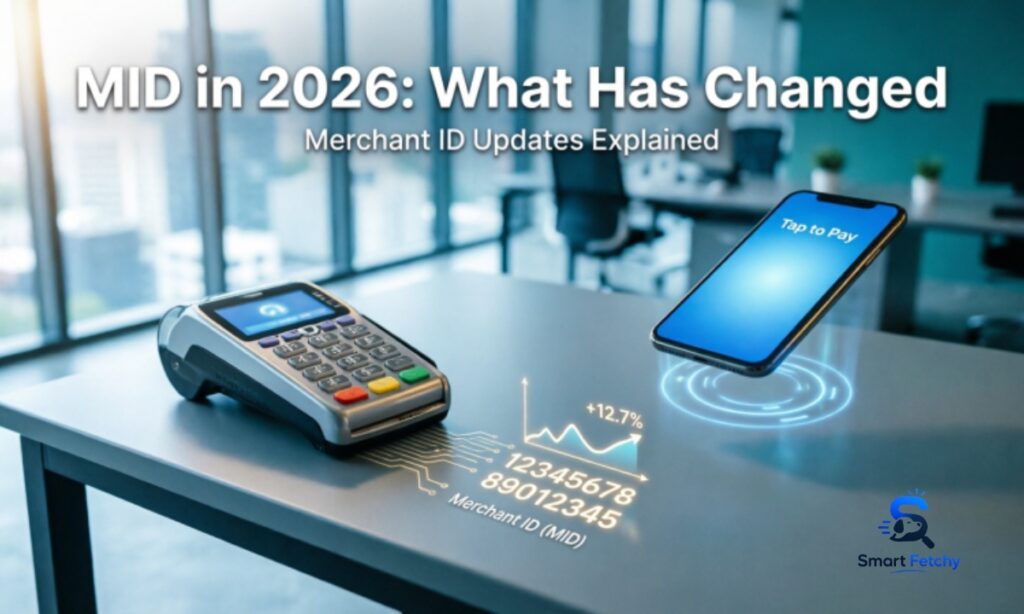
Payment processing has moved quickly over the past couple of years, and a few developments are shaping how MIDs work right now that older guides on this topic tend to skip.
- Heavier use of tokenization alongside MIDs. More processors now pair the MID with network tokens for stored card details, reducing how often raw card numbers move through the system while the MID still handles routing and reporting.
- AI driven monitoring at the MID level. Card networks and processors increasingly use machine learning models that watch spending patterns per MID in near real time, flagging anomalies faster than older rule based systems.
- Growth of embedded finance and sub merchant structures. Software platforms that add payment features directly into their product (sometimes called embedded finance) are issuing sub merchant IDs at a much larger scale, so more small businesses now operate under a master MID without realizing it.
- Stricter marketplace and platform oversight. Card networks have tightened rules around how aggregators register and monitor sub merchants, meaning platforms are asking for more business verification before issuing a sub merchant identifier.
- More businesses splitting operations across multiple MIDs. As chargeback thresholds get stricter, more mid-sized businesses are proactively separating product lines or sales channels into distinct MIDs to isolate risk before it becomes a problem.
These shifts mean the humble Merchant ID is doing more work than ever, sitting at the center of fraud prevention, compliance, and platform level risk management.
Frequently Asked Questions
Is a MID the same as a merchant account number?
Not exactly. A Merchant Account Number usually refers to the broader banking relationship with your processor, while a MID identifies a specific business or channel within that relationship. One merchant account can technically be linked to more than one MID.
Can a business have more than one MID?
Yes. Businesses with multiple locations, product lines, or brands often hold separate MIDs to keep reporting and risk isolated between different parts of the operation.
Is my MID the same as my Tax ID?
No. A Tax ID such as an EIN is issued by a government tax authority for tax reporting. A MID is issued by a payment processor purely for routing and identifying card transactions. They serve completely different purposes and are never interchangeable.
Where can I see my MID without calling support?
Check your card terminal sticker, your monthly merchant statement, or your payment gateway’s account settings first. Most processors display it clearly once you know where to look.
Does everyone who accepts online payments have a personal MID?
Not always. If you sell through an aggregator like Stripe, PayPal, or Square, you are likely processing under their master MID with an internal sub merchant identifier rather than a fully dedicated one of your own.
Conclusion
MID stands for Merchant Identification Number in the vast majority of business and payment related contexts, even though the same letters can pop up in a handful of unrelated fields. At its core, a MID is the unique code that ties every card transaction back to your business, making it central to routing payments, tracking chargebacks, preventing fraud, and keeping your merchant account in good standing.
If you take one thing away from this guide, let it be this: know where your MID lives, understand which type you have (master or dedicated), and keep an eye on the transaction patterns tied to it. That small string of digits carries a surprising amount of responsibility for how smoothly your business gets paid.

Welcome to SmartFetchy.com your go-to source for heartfelt prayers, inspiring prayers, meaningful quotes, and uplifting messages for every special moment. We create thoughtful and easy-to-share content that helps you express love, gratitude, faith, and happiness with the right words.