

PSA Meaning Explained: The Powerful Guide You Need in 2026
If you have seen the letters PSA pop up in a text message, on the news, in a medical report, or even in a business contract, you have probably wondered what it actually stands for. The truth is, PSA is not just one thing. It changes meaning depending on where you see it, and mixing them up can cause real confusion, especially when the topic involves your health.
This guide breaks down every common meaning of PSA, explains where each one comes from, and shows you exactly how to tell them apart. Whether you searched for a PSA because of a text from a friend, a doctor’s note, or a news headline, you will find a clear answer here.
What Does PSA Mean? Quick Definition
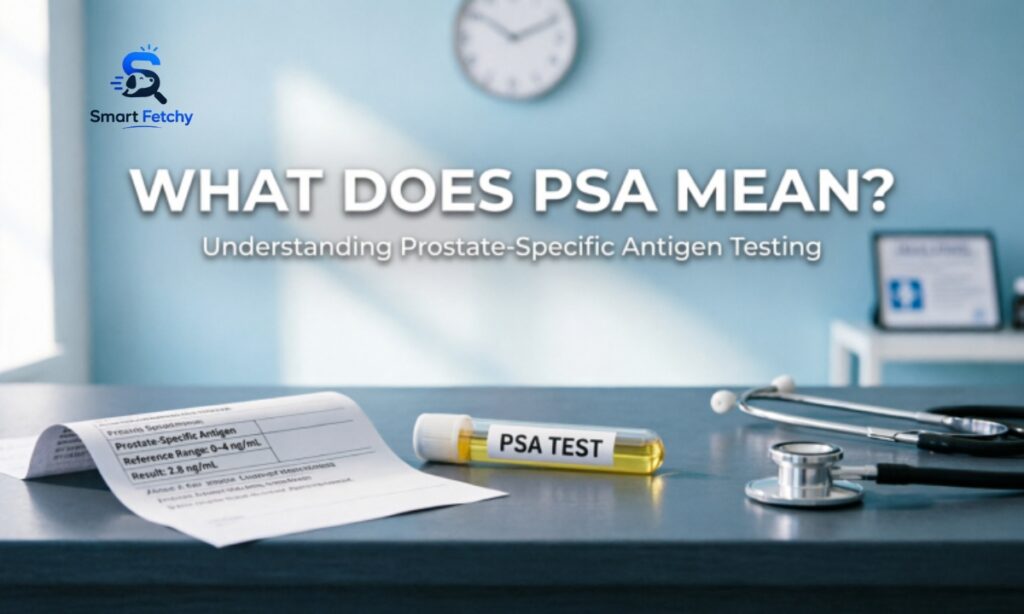
PSA most commonly stands for Public Service Announcement, a short message shared through TV, radio, social media, or text to inform the public about an important issue. In medicine, PSA refers to Prostate Specific Antigen, a protein measured through a blood test to check prostate health. The correct meaning always depends on the context in which PSA is used.
Read More: SYFM Meaning Explained
Why PSA Has More Than One Meaning
PSA is a short acronym, and short acronyms tend to get reused across many industries. The letters P, S, and A can be rearranged into dozens of phrases, so over time different fields adopted PSA for their own purposes.
This is common with three letter abbreviations. Think about how an ATM means automated teller machine to most people, but also stands for something completely different in networking or chemistry. PSA works the same way.
Here is a quick snapshot before we go deeper into each one.
| PSA Meaning | Field | What It Refers To |
| Public Service Announcement | Media, everyday language | A message that informs or warns the public |
| Prostate Specific Antigen | Medicine, health | A protein tested to monitor prostate health |
| Production Sharing Agreement | Oil and gas, business | A contract between a government and an energy company |
| Public Storage | Finance, stock market | Ticker symbol PSA on the NYSE |
| Pressure Swing Adsorption | Engineering, industrial gas | A method used to separate gases like oxygen |
| PSA Group | Automotive | A former French carmaker, now part of Stellantis |
| Prepaid Service Agreement | Consumer contracts | A service plan paid in advance |
| PlayStation App | Gaming, tech slang | Casual shorthand some gamers use |
Let’s go through the meanings that matter most, starting with the one people search for the most often.
PSA as Public Service Announcement
What Is a Public Service Announcement?
A Public Service Announcement, or PSA, is a message created to educate, inform, or warn the general public about something important. Unlike a regular advertisement, a PSA is not trying to sell you a product. It exists to serve a public interest, such as safety, health, or civic responsibility.
You have probably seen PSAs without even realizing what they were called. Classic examples include:
- Seatbelt safety campaigns
- Anti smoking or anti vaping commercials
- Wildfire prevention messages
- Flu shot reminders
- Voter registration announcements
- Domestic violence awareness campaigns
These messages usually run on television, radio, government websites, and increasingly on social media platforms in 2026, where short video PSAs now spread faster than traditional broadcast ones ever did.
Where Did the Term PSA Come From?
The concept of a public service announcement started with radio broadcasting in the early to mid 1900s. Broadcasters were required, or strongly encouraged, to dedicate a portion of airtime to messages that served the public good rather than commercial interests. Over the decades, PSA became the standard term for these spots, and it carried over into television, then the internet.
PSA as Internet and Text Slang
If you have ever received a text or seen a social media post that starts with the word PSA, this is a more casual, modern use of the term. In everyday online language, starting a message with PSA is a way of saying “pay attention, this is important,” even if the topic is not an official public health or safety issue.
For example:
- “PSA, the coffee shop downtown is closing early today.”
- “PSA, do not leave your phone charging overnight on your bed.”
- “PSA, the store is having a huge sale this weekend.”
This casual use of PSA borrows the seriousness of the original term but applies it loosely, sometimes even with a bit of humor. It has become one of the most common ways people use PSA meaning in daily conversation, especially among younger internet users.
How to Write an Effective PSA
If you are creating a PSA for a school project, a nonprofit, or a business initiative, keep these principles in mind:
- Lead with the most important information first
- Keep the message short, ideally under 60 seconds for video or audio
- Use clear, simple language that anyone can understand
- Include a specific call to action, such as a phone number or website
- Avoid selling anything directly, since a true PSA informs rather than promotes
- Make sure the tone matches the seriousness of the topic
A well made PSA sticks with people because it feels honest rather than promotional.
PSA as Prostate Specific Antigen
What Does PSA Mean in a Medical Context?
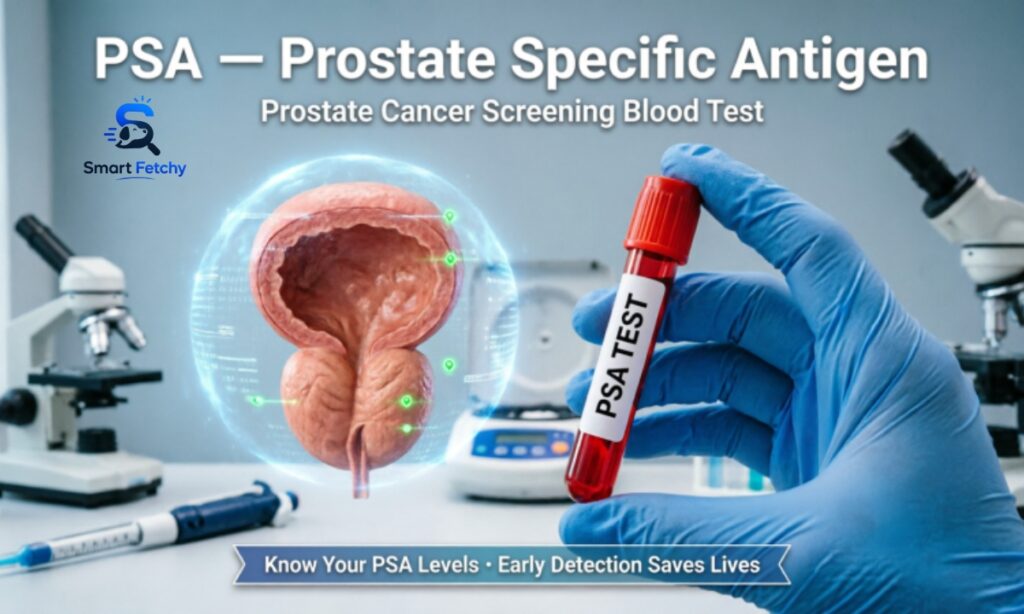
In healthcare, PSA stands for Prostate Specific Antigen. This is a protein produced by the prostate gland, a small organ found only in men, located below the bladder. Small amounts of PSA normally circulate in the blood, but certain conditions can cause PSA levels to rise.
A PSA test is a simple blood draw that measures how much of this protein is present. Doctors use it primarily as a screening tool to help detect prostate problems, including prostate cancer, early on.
Why Would a Doctor Order a PSA Test?
A doctor may recommend a PSA test for several reasons:
- Routine screening for men over a certain age, typically starting around 50
- Family history of prostate cancer
- Symptoms such as difficulty urinating or pelvic discomfort
- Monitoring a patient who has already been treated for prostate cancer
- Tracking how an existing prostate condition is changing over time
The test itself takes only a few minutes, and results are usually reported in nanograms per milliliter, written as ng/mL.
What Do PSA Test Results Mean?
Understanding your PSA number can feel confusing, since a high result does not automatically mean cancer, and a low result does not guarantee everything is fine. Here is a general breakdown used by many healthcare providers.
| PSA Level (ng/mL) | General Interpretation |
| Below 1.0 | Considered low risk |
| 1.0 to 4.0 | Generally within a normal range for most men |
| 4.0 to 10.0 | Considered borderline, further testing often recommended |
| Above 10.0 | Considered higher risk, usually requires additional evaluation |
These numbers are general guidelines, not a diagnosis. Many factors influence a PSA reading, including age, prostate size, infections, recent physical activity, and even recent ejaculation. This is why doctors rarely rely on a single PSA number alone.
Can Something Other Than Cancer Raise PSA Levels?
Yes, and this is one of the most misunderstood parts of PSA testing. A raised PSA level does not automatically point to prostate cancer. Other common causes include:
- Benign prostatic hyperplasia, a noncancerous enlargement of the prostate
- Prostatitis, which is inflammation or infection of the prostate
- Recent urinary catheter use or a medical procedure
- Vigorous exercise, particularly cycling, shortly before the test
- Recent sexual activity
Because so many things can influence the result, doctors typically look at the trend of PSA levels over multiple tests rather than a single reading.
What Happens If PSA Levels Are High?
If a PSA test comes back elevated, the next steps usually depend on how high the number is and the patient’s overall health history. Common follow up actions include:
- Repeating the PSA test after a short waiting period
- A digital rectal exam performed by a physician
- An MRI of the prostate for more detailed imaging
- A prostate biopsy if imaging or exam results raise concern
- Ongoing monitoring, sometimes called active surveillance, if the risk appears low
It is worth noting that PSA screening guidelines have evolved. Many health organizations now recommend a shared decision making conversation between patient and doctor rather than automatic testing for every man past a certain age, since overtreatment of slow growing prostate conditions has become a recognized concern in recent years.
PSA in Business and Industry
What Is a Production Sharing Agreement?
In the oil and gas industry, PSA stands for Production Sharing Agreement. This is a contract between a government, which owns the natural resources, and an energy company that has the technical ability and capital to extract them. Under a PSA, the company covers the exploration and production costs, and in return, both parties share the resulting output or profits according to terms set in the agreement.
Production Sharing Agreements are especially common in countries that want to develop their energy resources without taking on the financial risk themselves. These contracts can run for decades and often include clauses covering cost recovery, profit splits, and environmental responsibilities.
PSA as a Stock Ticker Symbol
If you follow the stock market, PSA is also the ticker symbol for Public Storage, a major real estate investment trust that operates self storage facilities across the country. When investors mention PSA in a financial context, they are almost always referring to this company’s publicly traded shares, not the acronym’s other meanings.
What Was the PSA Group in the Automotive World?
PSA Group, short for Peugeot Societe Anonyme, was once one of the largest automobile manufacturers in Europe, owning brands like Peugeot, Citroen, and Opel. In 2021, PSA Group merged with Fiat Chrysler Automobiles to form Stellantis, one of the largest automakers in the world. While the PSA name is largely retired now, it still appears in older documents, historical articles, and automotive industry discussions.
PSA in Engineering and Science
What Is Pressure Swing Adsorption?
In industrial and mechanical engineering, PSA stands for Pressure Swing Adsorption. This is a technology used to separate gases from a mixture under pressure, most commonly used to produce oxygen or nitrogen for medical and industrial use. Hospitals, for example, sometimes rely on PSA systems to generate a steady supply of medical grade oxygen on site rather than depending entirely on delivered tanks.
This meaning of PSA became especially relevant to the public during recent years, when oxygen supply challenges brought terms like PSA oxygen generators into mainstream conversation for the first time.
Read Also: PTSO Meaning Explained
How to Tell Which PSA Meaning Is Correct
Since PSA covers so many industries, context is everything. Use this simple guide to figure out which meaning applies to what you are reading or hearing.
| If PSA Appears In… | It Likely Means |
| A text message or social post | Public Service Announcement (casual use) |
| A news broadcast or ad campaign | Public Service Announcement |
| A doctor’s report or lab result | Prostate Specific Antigen |
| An energy or oil industry contract | Production Sharing Agreement |
| A stock market app or financial news | Public Storage (ticker symbol) |
| An old car magazine or automotive history article | PSA Group |
| A hospital equipment description | Pressure Swing Adsorption |
If you are ever unsure, look at the surrounding sentence. A single extra word, such as “test,” “campaign,” “contract,” or “stock,” usually gives away the correct PSA meaning immediately.
PSA Meaning in 2026: What Has Changed

Language and terminology shift over time, and PSA is no exception. A few updates worth knowing as of 2026:
- Short form video PSAs on social platforms have overtaken traditional broadcast PSAs in total reach, changing how public health and safety campaigns are designed.
- Medical guidance around PSA testing continues to emphasize personalized screening decisions rather than blanket testing recommendations for all men over a certain age.
- Stellantis, formed from the PSA Group merger, continues to phase out the standalone PSA branding in favor of its individual car brand names, making the automotive meaning of PSA increasingly historical.
- PSA used as internet slang has become even more common, often appearing at the start of viral posts, memes, and short videos as an attention grabbing device rather than a formal announcement.
- Pressure Swing Adsorption technology has seen renewed interest as hospitals and smaller clinics continue investing in on site oxygen generation systems.
Keeping these shifts in mind helps you understand not just what PSA meant historically, but how the term is actually used today.
Frequently Asked Questions
What does PSA stand for in a text message?
In a text message, PSA usually stands for Public Service Announcement, used casually to signal that the sender is about to share something they consider important or worth knowing, even if it is not an official announcement.
What is a normal PSA level for my age?
A general PSA level under 4.0 ng/mL is often considered within a normal range for many adult men, though normal ranges can shift slightly with age. Only a doctor who knows your full health history can properly interpret your specific result.
Does a high PSA always mean prostate cancer?
No. A high PSA level can be caused by several noncancerous conditions, including prostate enlargement, infection, or recent physical activity. Further testing is usually needed before any diagnosis can be made.
What is the difference between PSA and a regular commercial?
A PSA is designed to inform or protect the public rather than sell a product or service, while a regular commercial is created to promote a brand and generate sales. PSAs are often produced or supported by government agencies, nonprofits, or broadcasters as a public service.
Is PSA the same thing as a warning label?
Not exactly. A warning label is a fixed piece of text attached to a product, while a PSA is a broader message, often delivered through video, audio, or social media, aimed at educating a wide audience rather than warning about a single item.
What industries use PSA besides media and medicine?
PSA appears in oil and gas contracts as Production Sharing Agreement, in finance as the stock ticker for Public Storage, in engineering as Pressure Swing Adsorption, and historically in the automotive industry as PSA Group.
Conclusion
PSA is one of those acronyms that changes meaning depending entirely on where you encounter it. In everyday conversation and media, PSA almost always means Public Service Announcement. In a medical setting, PSA refers to Prostate Specific Antigen, a key marker doctors use to monitor prostate health. Beyond these two common uses, PSA also shows up in business contracts, stock markets, engineering, and even automotive history.
The next time you come across PSA, look at the context first. That one clue is usually all you need to know exactly which meaning applies, whether it is a friend sending you a heads up, a lab result from your doctor, or a term buried in a business contract.

Welcome to SmartFetchy.com your go-to source for heartfelt prayers, inspiring prayers, meaningful quotes, and uplifting messages for every special moment. We create thoughtful and easy-to-share content that helps you express love, gratitude, faith, and happiness with the right words.