
YK Meaning: What YK Stands For and How People Actually Use It
If you have scrolled through TikTok comments, opened a group chat, or watched a Twitch stream lately, chances are you have run into the letters “YK.” It shows up at the end of sentences, in captions, in replies, and sometimes on its own as a full response. For anyone outside the loop, it can look like a typo or a random keyboard slip. It is neither.
YK is one of the most common pieces of texting shorthand in use today, and once you understand it, you will start noticing it everywhere. This guide breaks down exactly what YK means, where it came from, how to use it correctly, and where you should probably avoid it.
What Does YK Mean? (Quick Answer)
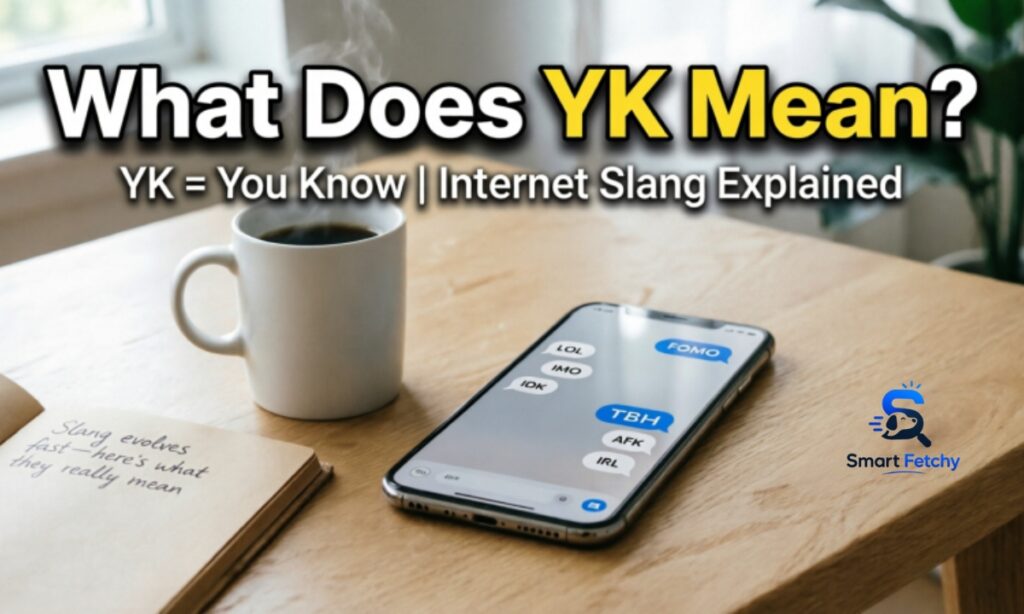
YK is internet and texting slang for “you know.” People use it to check that someone understands what they mean, to add casual emphasis to a sentence, or simply to make a message sound more natural and conversational. It is informal, tone-neutral, and appears across texting apps, social media captions, and gaming chats.
That is the short version. Now let’s look at where it comes from, how it is used in real conversations, and the situations where it does not belong.
Click Here To Read SYBAU Meaning
Where YK Comes From
“You know” has been part of everyday spoken English for a very long time. People naturally drop it into conversation without even thinking about it, usually as a small verbal habit that fills space, softens a statement, or checks that the listener is following along.
Texting shorthand grew out of a very practical problem: early phones and messaging platforms had strict character limits and clunky keypads. Typing full phrases took time and effort, so people started shortening common expressions. Words like “u” for “you,” “r” for “are,” and “idk” for “I don’t know” became normal parts of digital conversation in the late 1990s and early 2000s.
YK followed the same pattern. As SMS texting, AIM, and early social platforms pushed people toward shorter messages, “you know” got compressed into two letters. The abbreviation stuck around because the phrase itself is used so often in casual speech that shortening it made sense.
By the 2010s, YK had become a regular fixture in text messages and early social media posts. Today it shows up constantly across texting apps, Snapchat, TikTok comments, Instagram captions, Discord servers, and gaming lobbies on platforms like Twitch.
How People Use YK in Conversation
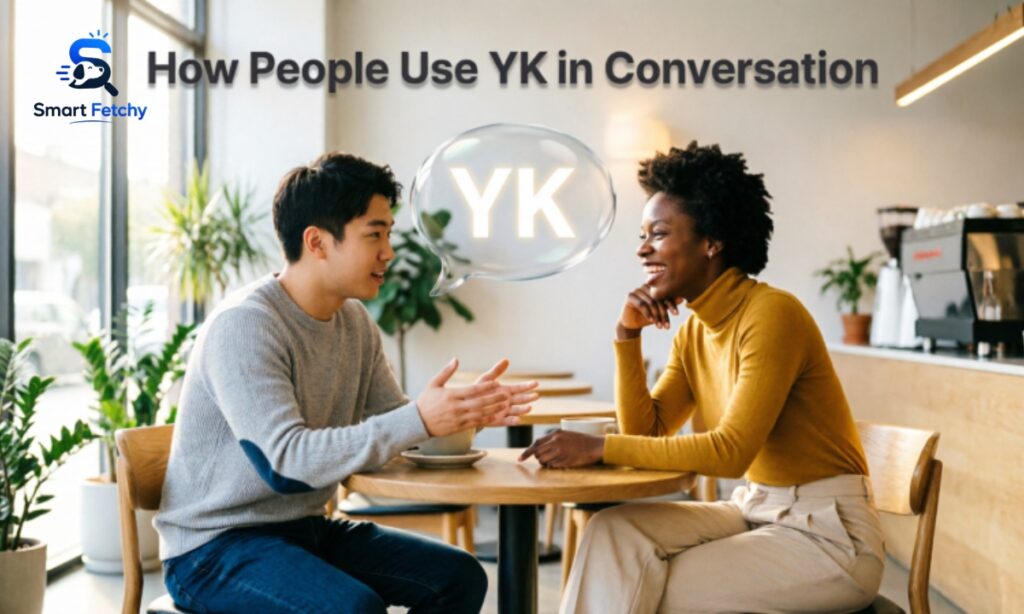
YK rarely carries a strong emotion by itself. Instead, it works more like a connector or a soft punctuation mark, similar to how people say “you know” out loud without really planning to.
Here are the most common ways YK shows up in real texting:
- As a check-in for shared understanding, added to the end of a sentence to confirm the other person gets it.
- As a filler that softens a statement, making a message feel less blunt or less serious.
- As an invitation to agree, especially when describing something relatable.
- As a full response on its own, replying “yk” to acknowledge something without needing more words.
- As a tone-setter, making a message sound casual and friendly rather than formal.
Examples of YK in Texting
- “I might just stay in tonight, yk, just feeling kind of tired.”
- “That feeling when your alarm goes off way too early, yk?”
- “Not really in the mood to talk about it, yk.”
- Friend: “Rough day?” You: “Yk.”
In each case, YK is doing quiet work in the background. It is not the main message, it is the seasoning that makes the message feel more like natural speech.
YK Lowercase vs YK Uppercase
You will see this slang written both ways, and the capitalization does not change what it means.
| Style | Where it commonly appears | Notes |
| yk (lowercase) | Fast texting, DMs, casual chats | Most common form, especially among younger texters |
| YK (uppercase) | Captions, comments, headlines, some formal-casual writing | Slightly more visible, same meaning |
People typing quickly on a phone tend to skip capitalization altogether, which is why lowercase “yk” is the more frequent version in real conversations. Uppercase “YK” tends to show up more in captions or when someone is emphasizing the phrase.
Does YK Ever Mean Something Else?
Most of the time, no. “You know” is by far the dominant meaning across texting, social media, and gaming spaces. But slang is rarely one-size-fits-all, and a few alternate meanings do exist depending on context and community.
- Young King – Occasionally used as a compliment or nickname among friends or in gaming and hip-hop adjacent spaces. Usually appears alongside other context clues, not as a standalone message.
- Yankee – Rarely used in some sports or regional contexts, almost never in everyday texting.
- You’re Kidding – In some fast-paced group chats, a small number of users stretch YK to mean disbelief, though this is far less common than “you know” and depends heavily on the conversation.
If someone sends you “yk” with no other context, the safest and most accurate read is “you know.” Alternate meanings are the exception, not the rule, and they almost always come with extra context that makes the intended meaning obvious.
Is YK Rude or Dismissive?
No, YK is generally neutral. It does not carry sarcasm or attitude on its own. Whether it reads as friendly, casual, sarcastic, or even a little short depends almost entirely on the surrounding message and the tone of the conversation, not on the abbreviation itself.
That said, context does matter. A message like “yk your place” without any other explanation could come across as dismissive or even disrespectful, depending on the relationship between the people texting. As with most slang, the words around YK carry more weight than the letters themselves.
Where YK Shows Up Most
YK is not tied to one single platform. It spreads across almost every space where casual, fast communication happens.
- Texting and SMS – One of the original homes for this abbreviation, still widely used today.
- Snapchat – Common in quick back-and-forth chats between friends.
- TikTok – Frequently used in comments and captions to express relatable feelings.
- Instagram – Shows up in captions, comments, and DMs.
- Discord and gaming chats – Used for quick coordination or casual banter during gameplay.
- Twitch chat – Appears during live streams as a fast, low-effort way to react or agree.
- Dating apps – Often used to build a sense of closeness or shared understanding early in a conversation.
Because it takes almost no effort to type, YK fits naturally into any platform built around speed and short-form communication.
YK vs Similar Texting Slang
YK is part of a much bigger family of texting shortcuts. Comparing it to similar terms helps clarify exactly what makes it different.
| Abbreviation | Meaning | How it differs from YK |
| YK | You know | Soft connector, checks understanding, adds tone |
| IKR | I know, right | Agrees enthusiastically with something already said |
| IDK | I don’t know | Expresses uncertainty, opposite function to YK |
| TBH | To be honest | Signals honesty or a direct opinion is coming |
| FR | For real | Emphasizes sincerity or agreement |
| NGL | Not gonna lie | Introduces an honest or blunt statement |
YK stands apart because it is less about stating a fact or opinion and more about creating a shared feeling between the two people texting. It functions more like a tone modifier than a direct statement.
Why Slang Like YK Keeps Growing in 2026
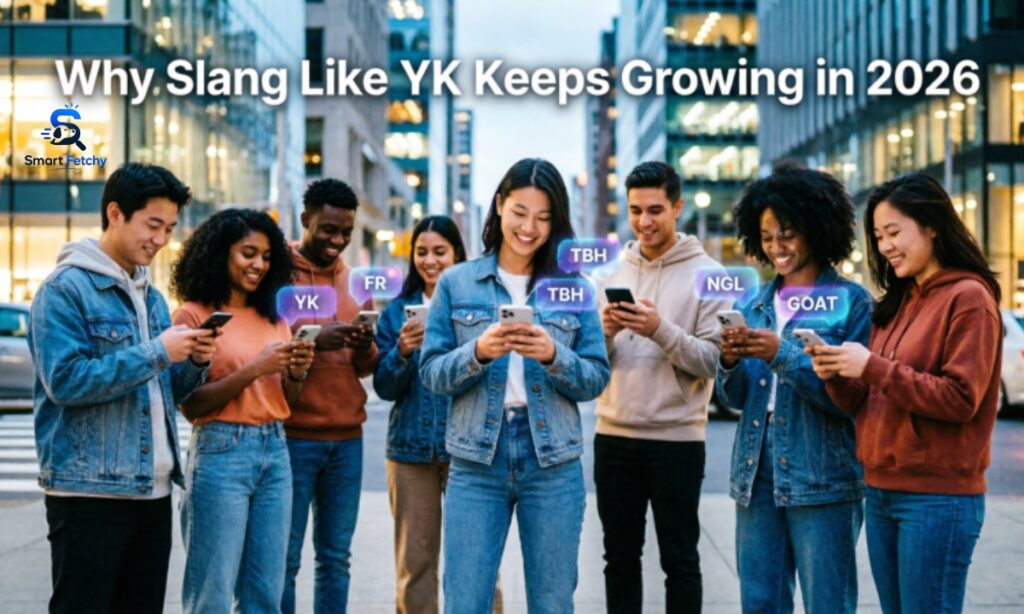
Texting culture has only gotten faster and more casual, and by 2026 the shift toward short, expressive slang has become even more pronounced. A few reasons explain why abbreviations like YK are more common than ever right now.
- Voice-to-text and predictive typing have made casual phrasing spread faster, since people type the way they naturally speak and shorthand like “yk” slips in automatically.
- Short-form video culture on platforms built around quick clips and captions rewards fast, low-effort text that still feels personal and relatable.
- Cross-platform slang blending means a phrase that starts in a gaming chat can appear in a dating app message within days, thanks to how quickly communities now overlap online.
- AI-assisted messaging tools are increasingly trained on casual, real-world texting patterns, which means slang like YK now shows up in autocomplete suggestions and message drafts more often than in previous years.
- Younger users driving trends continue to favor authentic, conversational language over formal phrasing, and platforms have leaned into that preference with features that reward short, casual posts.
None of this changes what YK means. What it does show is that the shorthand is not fading out. If anything, it has become more embedded into everyday digital communication than it was even a couple of years ago.
When You Should Avoid Using YK
Slang has its place, and workplace or formal communication usually does not it. A few situations where YK should generally be avoided:
- Professional emails – Use “as you know” or simply state the point directly instead.
- Job applications or cover letters – Stick to full, formal language.
- Customer service messages – Especially in industries where a professional tone matters.
- Academic writing – Formal writing calls for complete phrases, not texting shorthand.
- First conversations with someone unfamiliar with the term – Older generations or people less active on social media may read it as confusing or even as a typo.
In short, if the setting calls for a formal or polished tone, spell out “you know” or rework the sentence entirely.
How to Respond When Someone Sends You YK
If a friend sends you a message ending in “yk” or replies with just “yk” on its own, you do not need to overthink it. A few natural ways to respond:
- Simply reply with agreement, like “yeah, totally” or “same.”
- Ask a light follow-up question if you want more detail, such as “yk what though?”
- Mirror the tone and reply casually, since YK is meant to keep the conversation feeling relaxed rather than formal.
There is rarely a wrong way to respond to YK, since it is designed to keep things easy and low-pressure.
Quick Reference Table
| Question | Answer |
| What does YK mean? | You know |
| Is it rude? | No, generally neutral, tone depends on context |
| Is it only for young people? | No, but it is most common among Gen Z and younger millennials |
| Can it mean something else? | Rarely, such as Young King or Yankee, depending on context |
| Where is it used most? | Texting, Snapchat, TikTok, Instagram, Discord, Twitch, dating apps |
| Should I use it at work? | No, avoid it in professional or formal writing |
| Uppercase or lowercase? | Both are used, lowercase is more common in fast texting |
Final Thoughts
YK is a small piece of slang that carries a simple, familiar meaning: you know. It grew out of the same need that shaped almost all texting shorthand, the desire to communicate quickly without losing the natural, conversational feel of spoken language.
Understanding YK is not complicated once you see it in context. It softens statements, checks for shared understanding, and helps digital conversations feel less stiff. Use it freely in casual chats with friends, but leave it out of anything formal, and you will have no trouble keeping up with how people actually talk online in 2026.

Welcome to SmartFetchy.com your go-to source for heartfelt prayers, inspiring prayers, meaningful quotes, and uplifting messages for every special moment. We create thoughtful and easy-to-share content that helps you express love, gratitude, faith, and happiness with the right words.